
Which charger do I need for my smartphone?
25 W, 45 W, 65 W, or more?
GaN, USB-C, Power Delivery, and PPS sound more complicated than they need to be. FRATU explains in plain language what really matters when charging and why charger, cable, and device need to work together.
A charger's maximum wattage doesn't automatically match the charging power of the connected device.
It's not the highest wattage that decides.
The charger provides power. The device, together with the charging standards it supports, determines how much power can actually be used. The cable also needs to support the required power.
25 W, 45 W, 65 W, or 100 W+?
25 W
Smartphone
A compact power class for suitable devices.
45 W
Smartphone + tablet
More power headroom for compatible devices.
65 W
Smartphone + tablet + compatible USB-C notebooks
Interesting if you want to charge several device classes.
100 W+
Powerful USB-C devices / multi-device
High power headroom for corresponding uses.
More watts doesn't automatically mean faster charging.
GaN Technology
GaN. More power, less space.
GaN-based power electronics enable powerful chargers in a compact form factor and can reduce electrical losses.
GaN alone doesn't determine charging speed. The actual charging power still depends on the charger, charging standard, cable, and device.
Simplified principle diagram — does not show the actual internal structure of the pictured product.
More compact
Powerful electronics in a compact form factor.
Efficient
Modern power electronics can reduce electrical losses.
Powerful
High output power is possible with correspondingly designed GaN chargers.
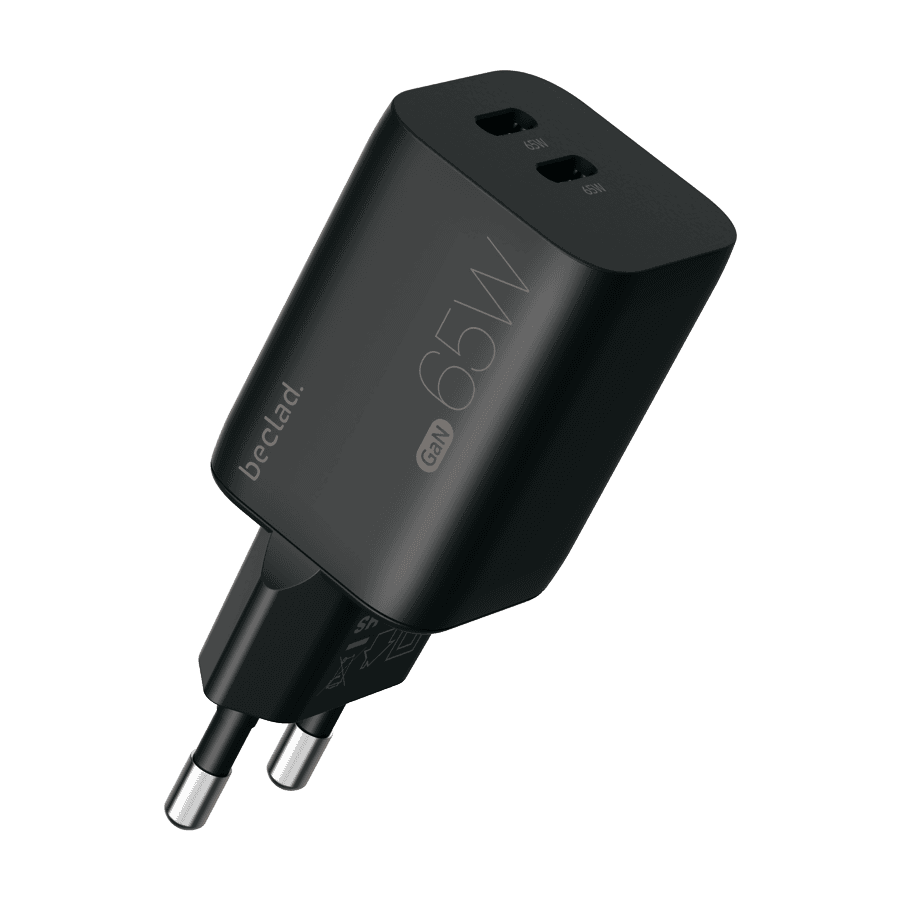
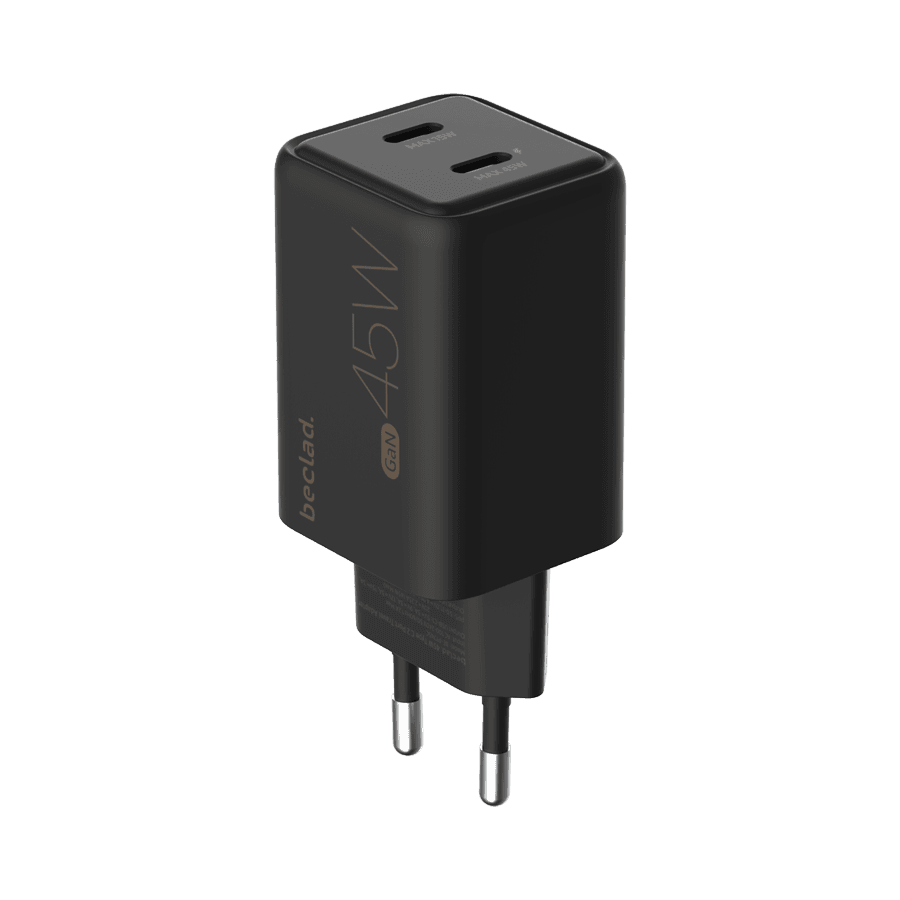
Example: a compact beclad. charger
Classic vs. GaN
| Classic power supply architecture | GaN power supply | |
|---|---|---|
| Form factor | Usually larger and heavier | Tends to be more compact |
| Power electronics | Silicon-based | Gallium-nitride-based |
| Use case | Broad standard applications | Especially common in compact high-power chargers |
| Power density | Compact form factors possible | High power density particularly achievable |
GaN isn't automatically better in every respect — the specific properties depend on the individual product.
What is USB Power Delivery?
USB Power Delivery (USB PD) is a standard defined by the USB Implementers Forum (USB-IF) that lets a charger and a device negotiate which voltage and current are transferred. A USB-C port and a high wattage alone don't fully tell you whether a charger is a good match for a given smartphone.
Simplified illustration.
What does PPS mean?
PPS stands for Programmable Power Supply, an optional extension of USB Power Delivery. With compatible devices and chargers, voltage and current can be adjusted more finely and on demand within the supported ranges than with fixed power levels. Not every smartphone supports PPS.
Without PPS
Fixed charging profiles
With PPS
More flexible voltage and current adjustment
Input
AC 100-240V 50/60Hz, 1.2A Max
Output USB C
5V/3A, 9V/3A. 12V/3A, 15V/3A, 20V/2.25A(45W)
PPS
3.3-11V/4.05A, 5.0-16V2.8A SFC 2.0
Size
28.4x46.3x46.4mm (without plug)
Your charger can do a lot. Can your cable keep up?
Every link in the charging chain has to match.
A powerful charger alone doesn't guarantee maximum charging power. The cable also needs to be suitable for the required power and technical requirements.
Certain 45 W fast-charging solutions, for example, require or recommend a 5 A cable — this doesn't generalize to every device.
Learn more about USB-C cablesWhich charger fits my Samsung Galaxy?
Supported charging power and charging standards differ by Galaxy model — a blanket statement like "Samsung needs 45 W" falls short. What matters is the specific device.
Which charger fits your everyday life?
Smartphone only
A compact power class is enough for most use cases.
Smartphone + tablet
A bit more power headroom for multiple device classes.
Smartphone + notebook
Compatible USB-C notebooks usually need more power.
Multiple devices at once
Multiple ports and higher total power become relevant.
Discover the right charger
beclad. is a brand of Samsung C&T. Many beclad. accessories, however, are designed to work across brands and, depending on the product and supported technical standards, can be used with smartphones, tablets, notebooks, and other devices from different manufacturers.
It's not just your smartphone's brand that matters.
What matters is what your device actually supports.
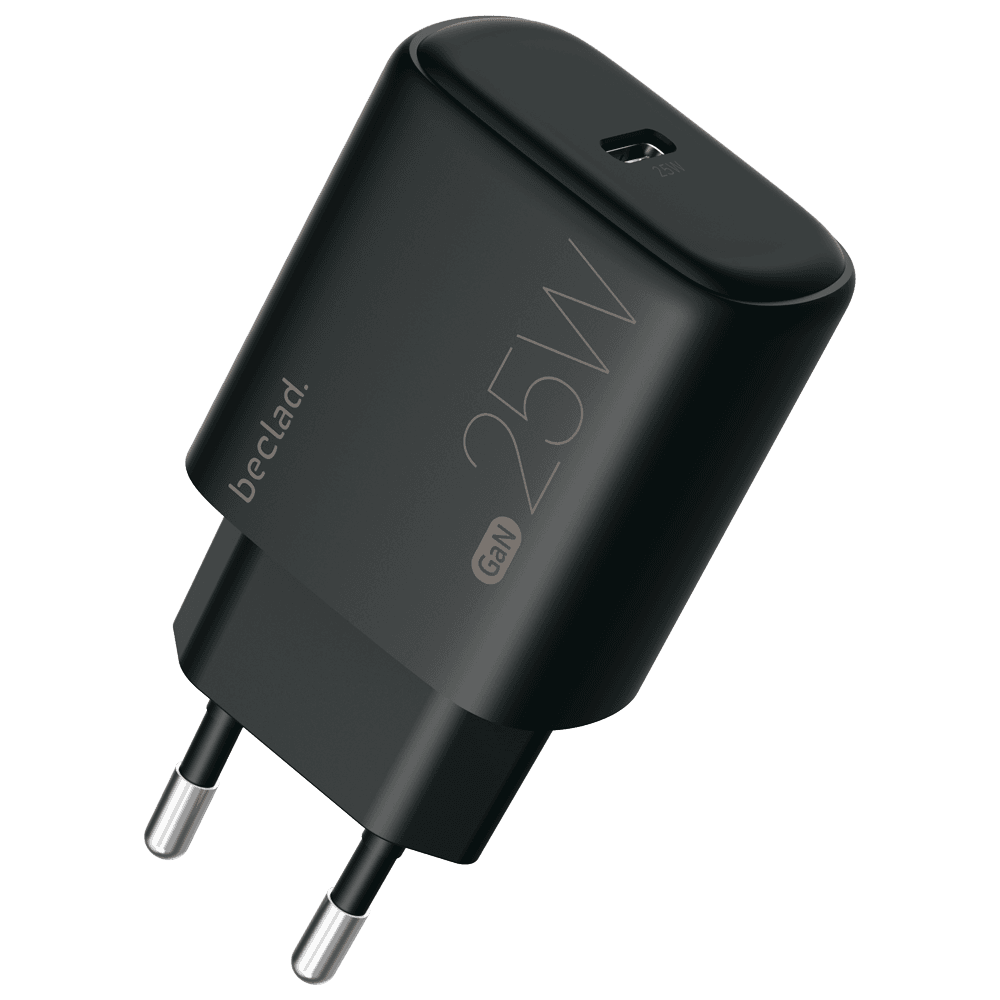
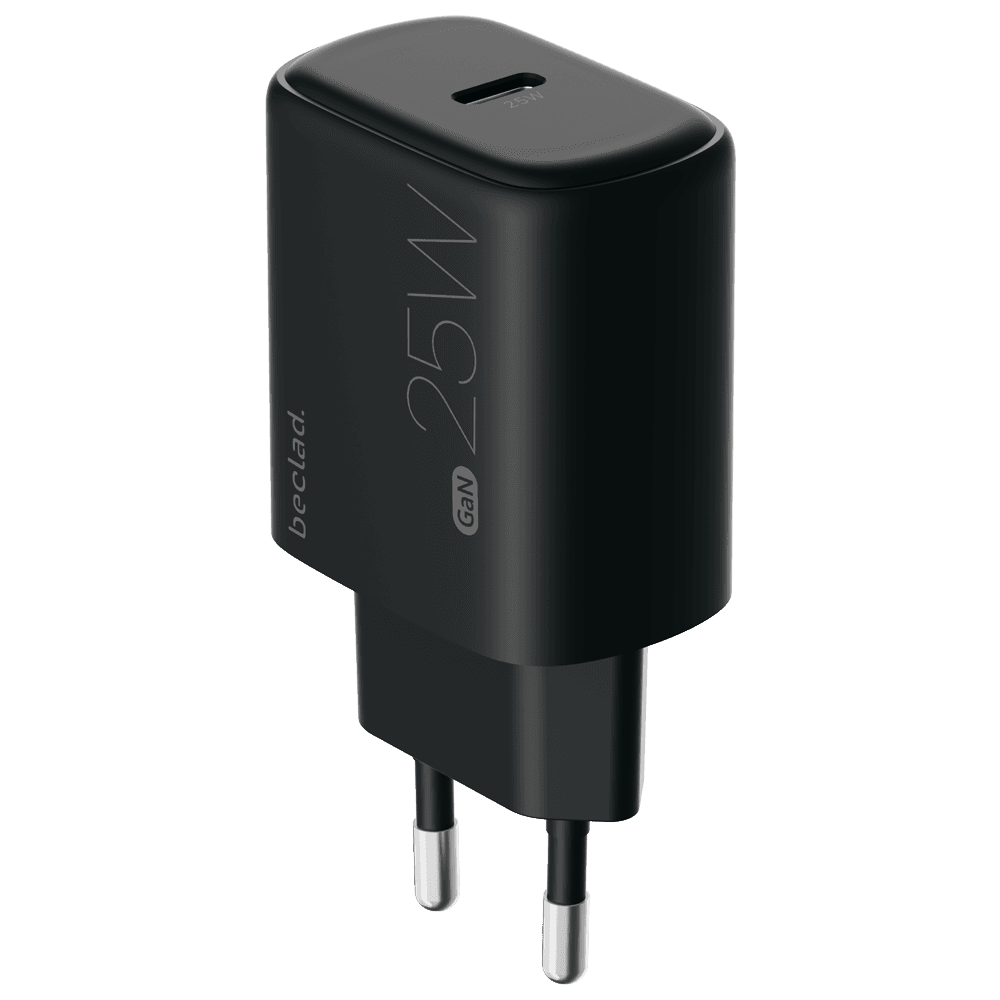
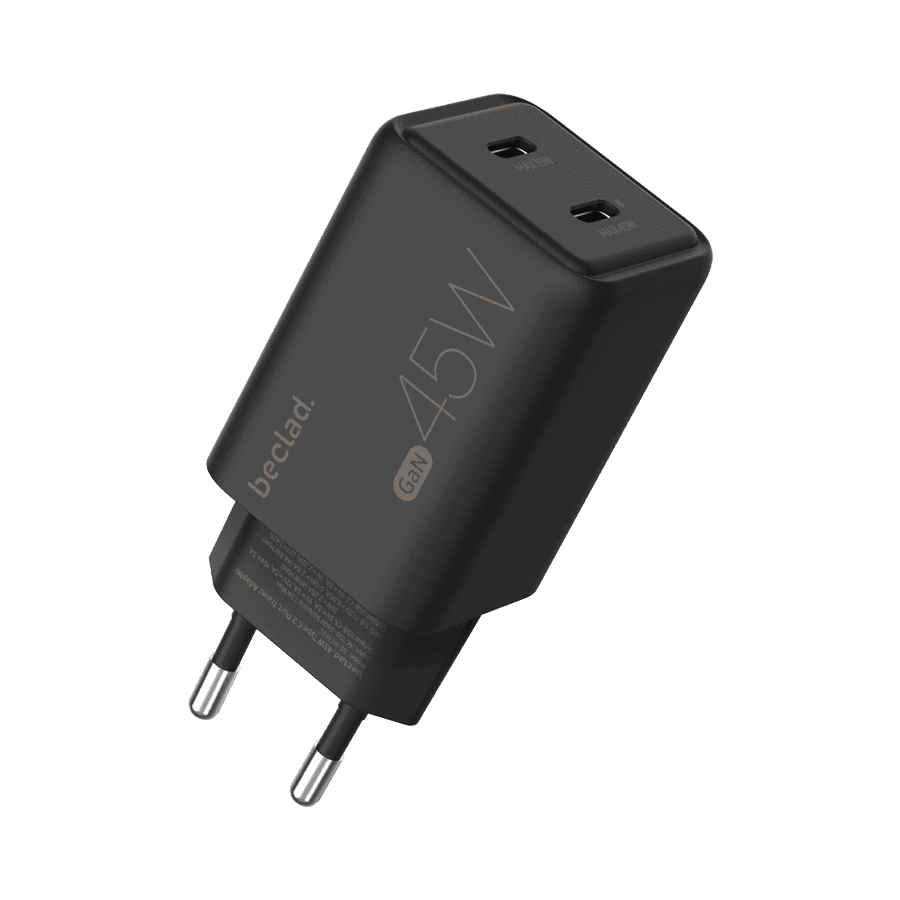
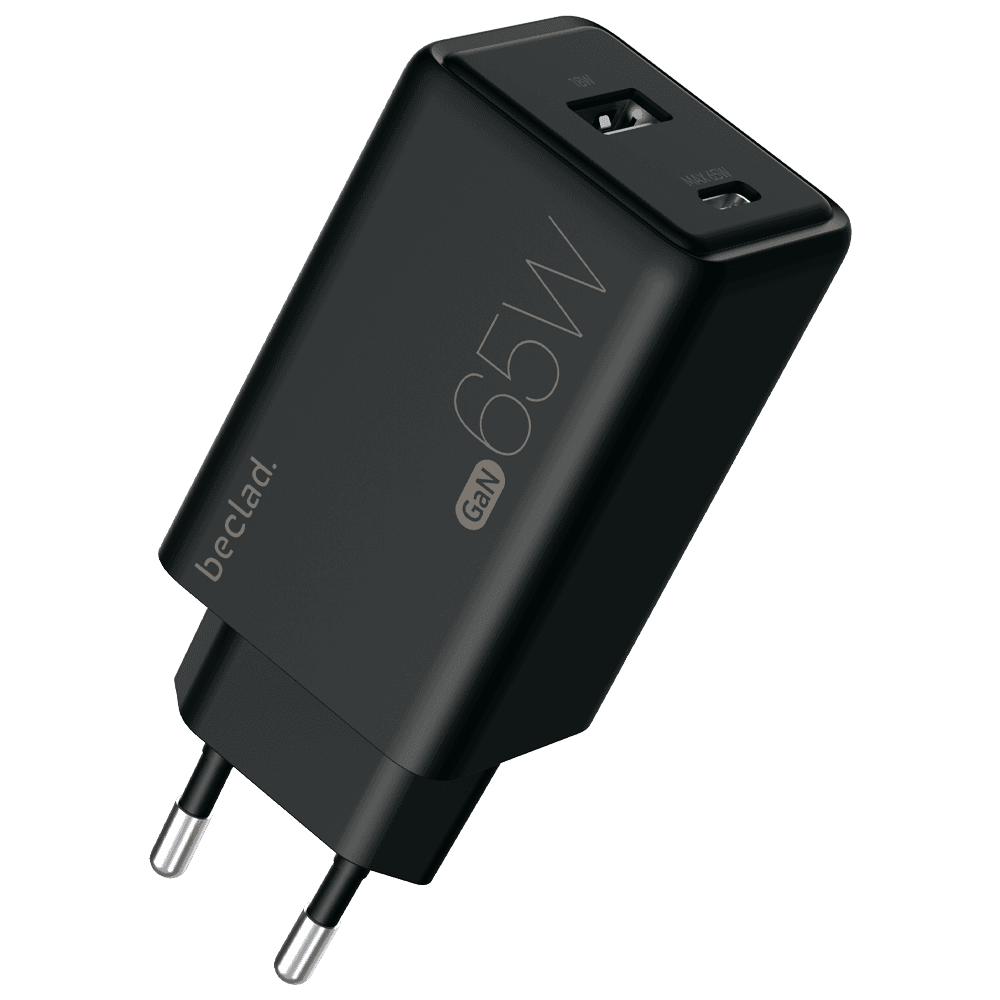
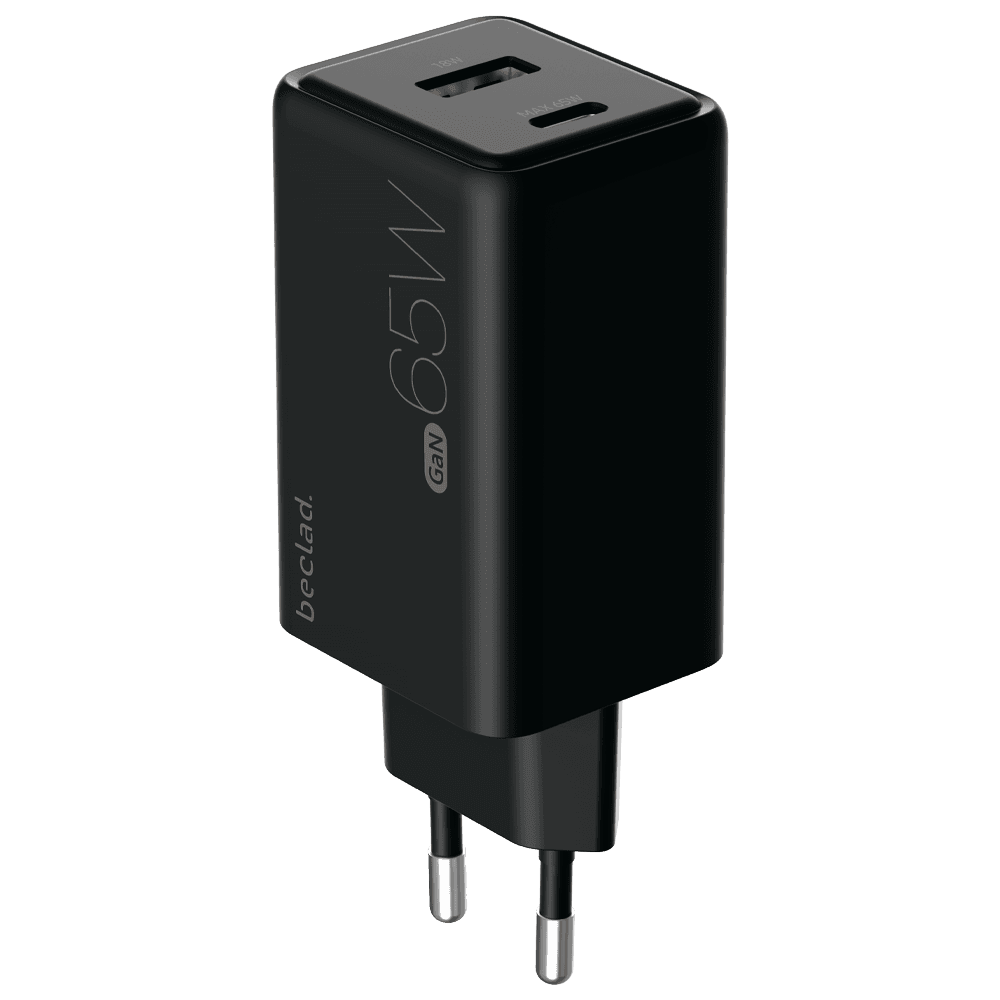
A selection of real beclad. chargers with different charging power — the technical data comes directly from the FRATU product catalog.
%2520black%2520(1).png&w=3840&q=75)
%2520white%2520(1).png&w=3840&q=75)
Frequently asked questions
What does wattage mean for a charger?
Wattage describes the maximum power a charger can output. How much of that is actually used also depends on the connected device and the cable used.
Does a 100 W charger automatically charge my smartphone faster?
Not automatically. The actual charging speed depends on the maximum charging power supported by the smartphone — a suitable 45 W or 65 W charger can charge a smartphone just as fast as a 100 W model if the device doesn't use higher power.
What is GaN?
GaN (gallium nitride) is a semiconductor material used in modern power electronics. GaN-based chargers can be built more compactly and reduce electrical losses — the actual charging power still depends on the charger, cable, and device together.
What is USB Power Delivery?
USB Power Delivery (USB PD) is a standard that lets a charger and a device automatically negotiate which voltage and current are transferred — the shared "language" for charging over USB-C.
What does PPS mean?
PPS stands for Programmable Power Supply, an optional extension of USB Power Delivery. With compatible devices and chargers, voltage and current can be adjusted more finely within the supported ranges than with fixed charging profiles.
Do I need a specific USB-C cable for fast charging?
Yes — the cable needs to be suitable for the required power and the charging standards in use. Certain 45 W fast-charging solutions, for example, require or recommend a 5 A cable. An unsuitable cable can limit the maximum charging power, even if the charger and smartphone would actually support more.
Can I use a more powerful charger on a smartphone with lower maximum charging power?
As a rule, yes. The charger and smartphone automatically negotiate the power actually used. A charger with a higher maximum wattage therefore doesn't automatically charge a smartphone with more power than the device itself supports.
Which charger do I need for my Samsung Galaxy?
That depends on the specific Galaxy model — supported charging power and charging standards differ by device. The FRATU compatibility finder helps you find suitable products starting from your model.
The right combination, not the highest wattage.
Smartphone, charging power, charging standard, charger, and cable belong together. FRATU helps you find the right combination for your device.